

The agentic document fraud platform for financial services
1 in 16 documents show signs of manipulation or fabrication. Inscribe combines the industry's largest financial document network with agentic AI to stop fraud before it costs you and funds the criminal networks behind it.
Switch to your desktop to see the interactive product tour.
Designed for accurate, actionable fraud detection
Great document fraud detection isn’t about catching more, it’s about catching what’s real, avoiding unnecessary noise, and making every result clear and actionable.

Catch more document fraud
With layered detection that analyzes documents from multiple angles, Inscribe uncovers sophisticated fraud with greater accuracy.

Stay ahead of new approaches
Inscribe uses agentic reasoning to evaluate signals in context, draw conclusions, and explain its thinking, helping you identify new fraud tactics sooner.

Act on results you can trust
With clear risk levels and plain-language explanations for every document and customer, your team can make faster, more confident decisions.
A multi-layered approach to fast-evolving document fraud
Every document is analyzed using multiple detection methods at once, each contributing a different layer of evidence. Together, they uncover what other platforms miss and produce a single, easy-to-understand risk level your team can act on.
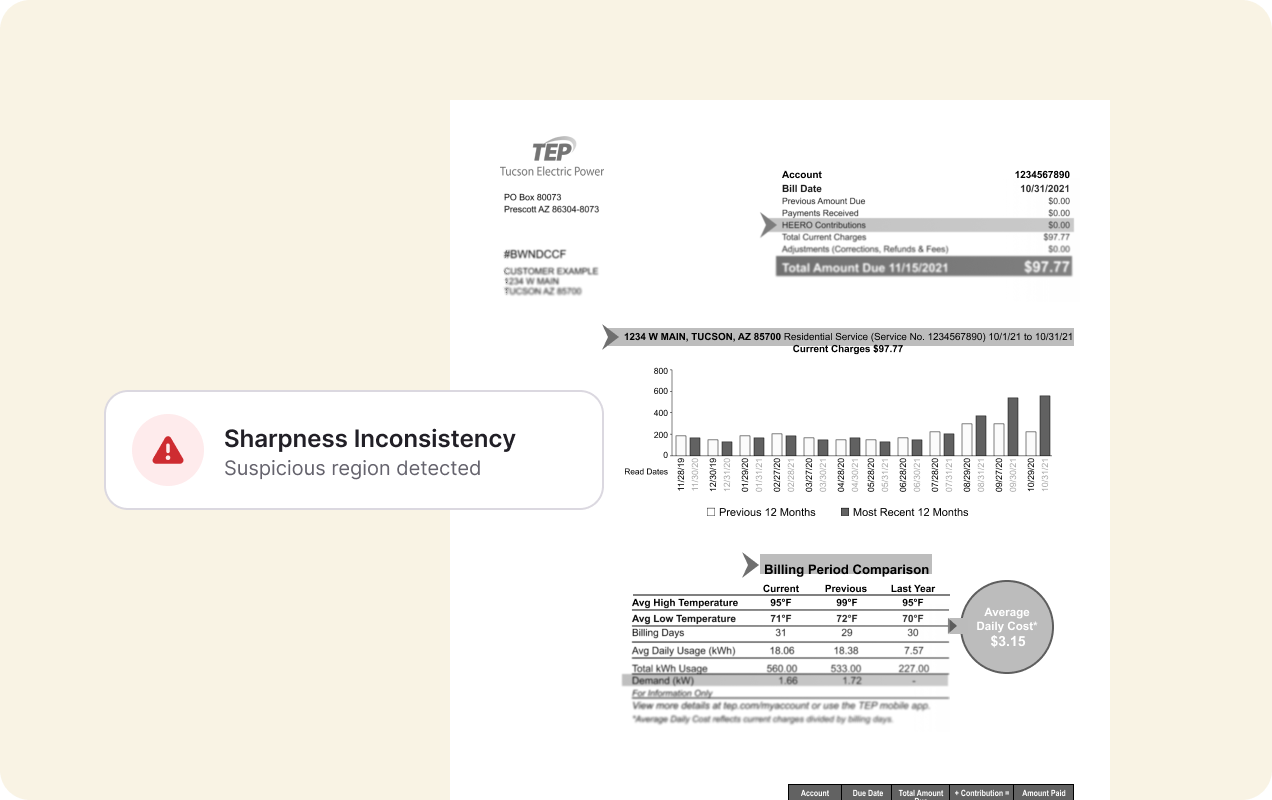
Forensic detection
Forensic analysis reviews fonts, metadata, and file history to detect inconsistencies that can indicate document manipulation.
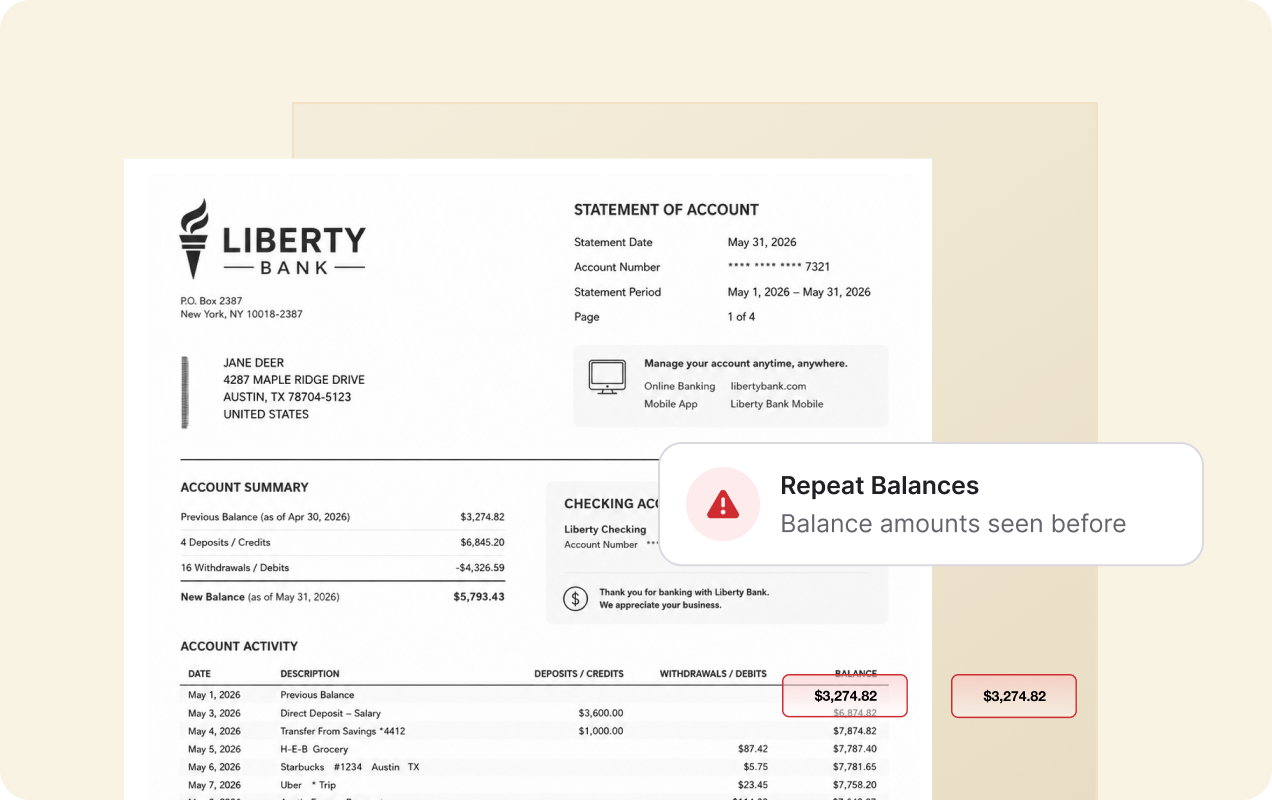
Network intelligence
Network signals identify reused templates, recycled layouts, and repeat fraud patterns by comparing documents against millions of real-world applications.
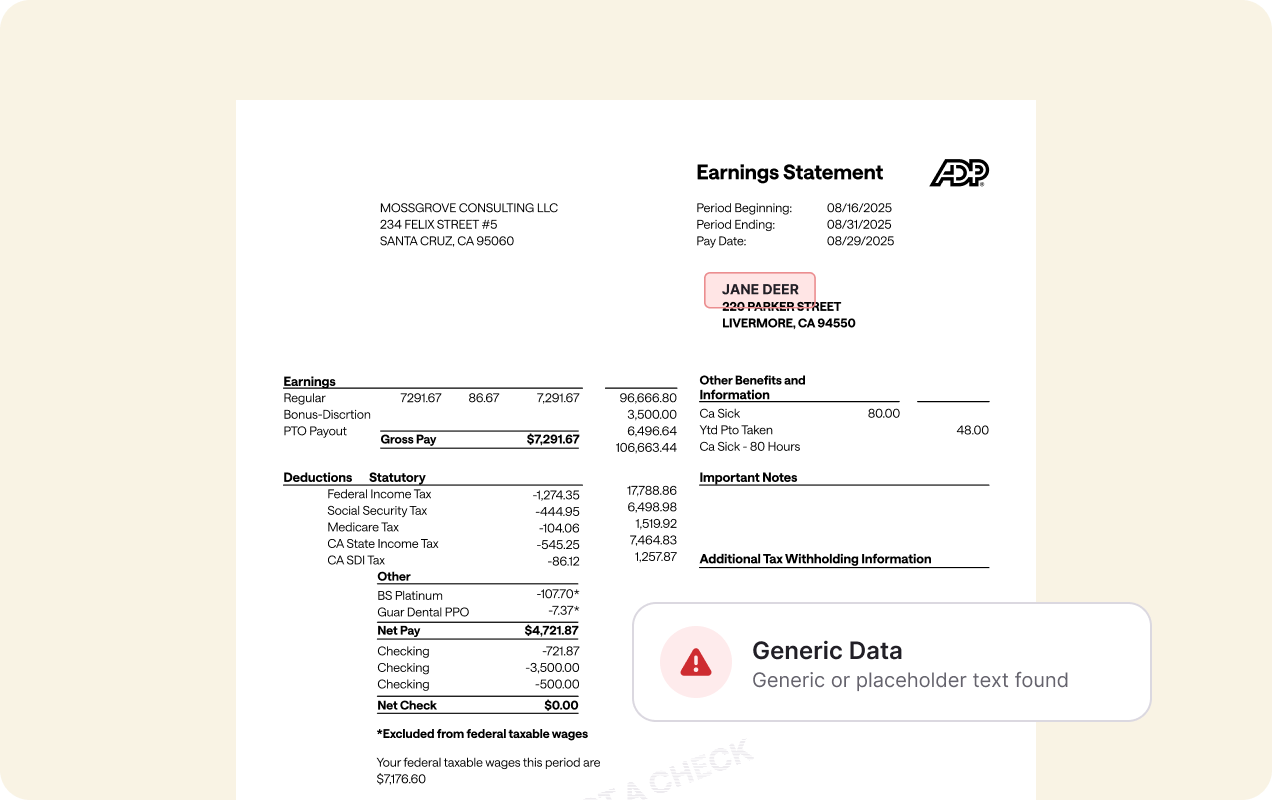
Semantic inconsistencies
Semantic understanding analyzes what a document says, not just how it looks, to uncover contradictions and inconsistencies in its content.
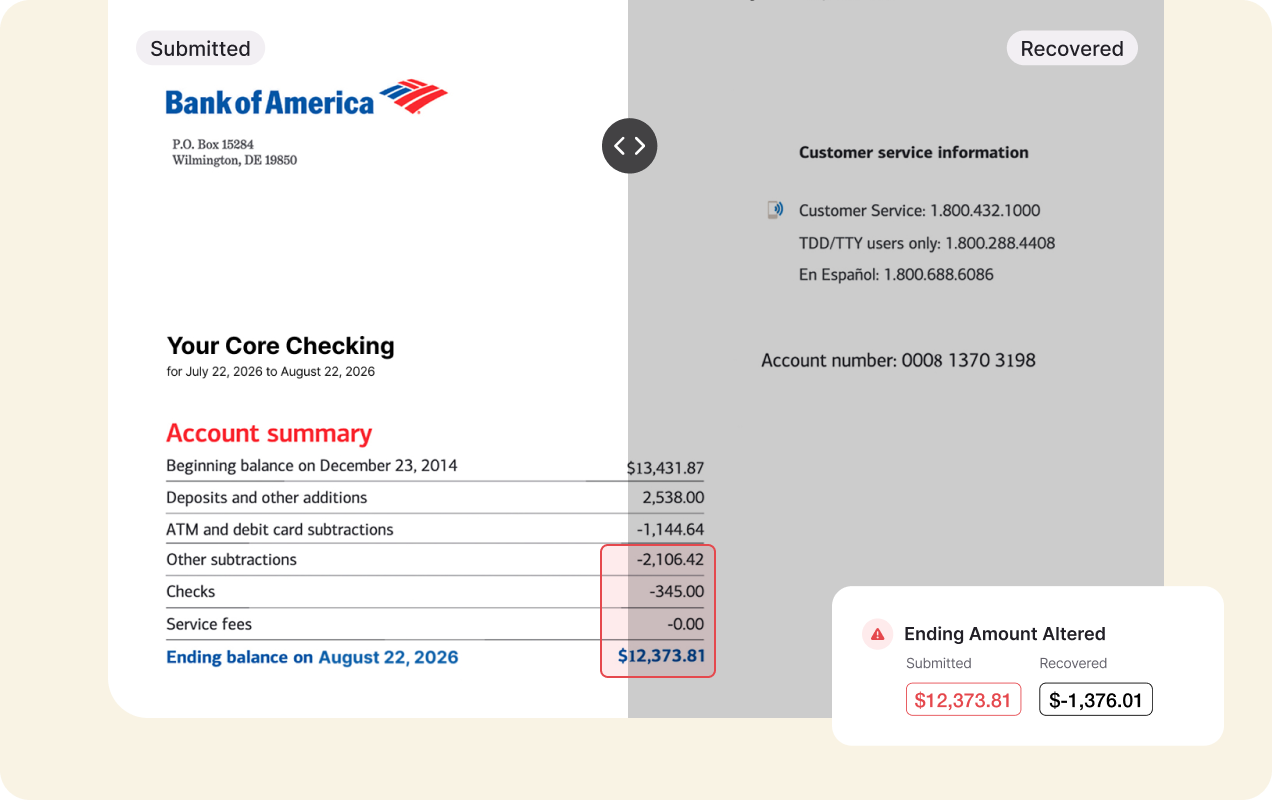
Perceptual detection
Perceptual analysis examines documents at the pixel level to detect edits and visual inconsistencies that can evade manual review.
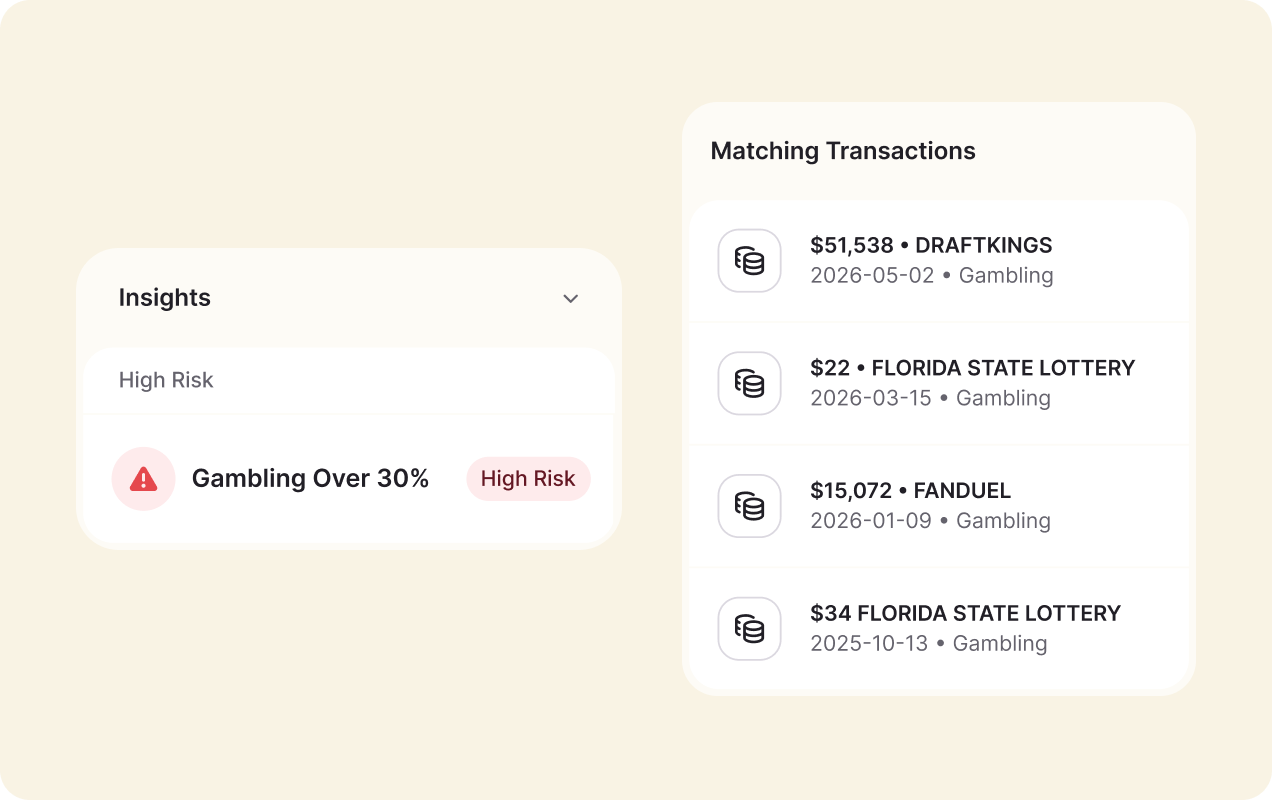
Custom insights
Custom insights are defined by your team and aligned to your SOPs, flagging unusual spending behavior and other risk indicators unique to your review process.
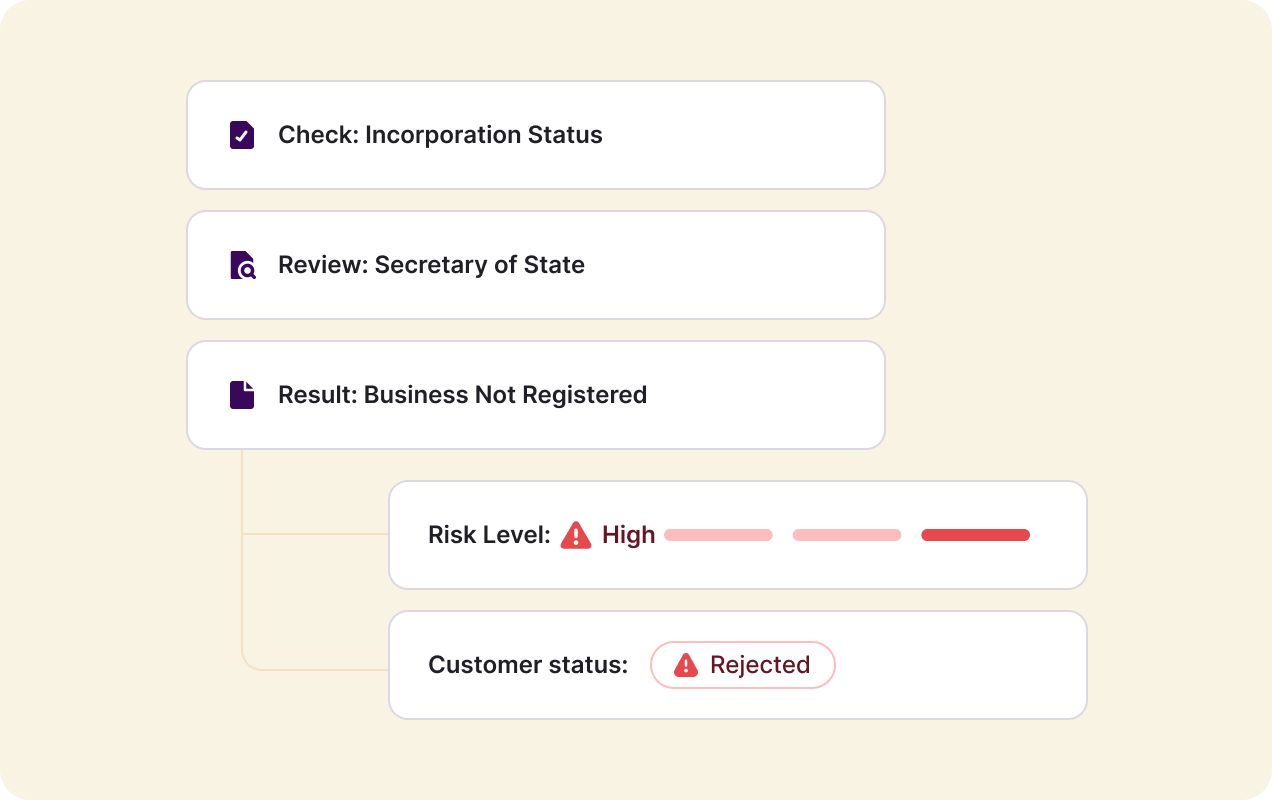
Public data
Public data enriches each applicant profile with identity, business, and address verification, surfacing risks that exist beyond the document itself.


From document submission to decision in seconds
1
Connect to your existing workflow
Choose the deployment that works best for your team, from our web app and API to partner integrations. However you choose to deploy, Inscribe fits seamlessly into your workflow.
2
Documents are analyzed with layered detection
Every document is automatically checked against layered detection, workflow-specific rules, and external research on the people and businesses behind it.
3
Results returned with a risk level
Low-risk documents clear automatically. Flagged ones land in your queue with the evidence already assembled, so your team spends time deciding, not digging.
Everything you need to detect document fraud and assess risk
Inscribe combines fraud detection, document processing, and additional intelligence into a single platform, helping your team uncover hidden risk and make faster, more informed decisions.

Fraud detection
Detect manipulated and fraudulent documents, including bank statements, pay stubs, and tax forms.

Classification
Automatically identify document types and formats to route, process, and analyze them correctly.

Parsing
Extract structured data from documents — from basic fields to detailed transactions.

Verification
Validate document authenticity and consistency using internal checks and external signals.

Customer-level analysis
Connect the dots across documents to assess risk at the customer level, not just per document.

Cashflow insights
Analyze income, spending patterns, and financial behavior to surface risk signals beyond the document itself.

Configurability
Adapt detection and decisioning to your workflows, risk tolerance, and specific use cases.


Assistant
Accelerate investigations with a co-pilot that surfaces insights, explains results, and helps your team take action faster.

Collect
Request and gather documents directly from applicants with a streamlined, secure collection experience.
The impact of missed fraud
Fraudulent documents don't just create losses — they fund organized fraud rings and, in some cases, far more serious crimes. AI is making these operations faster and harder to stop.
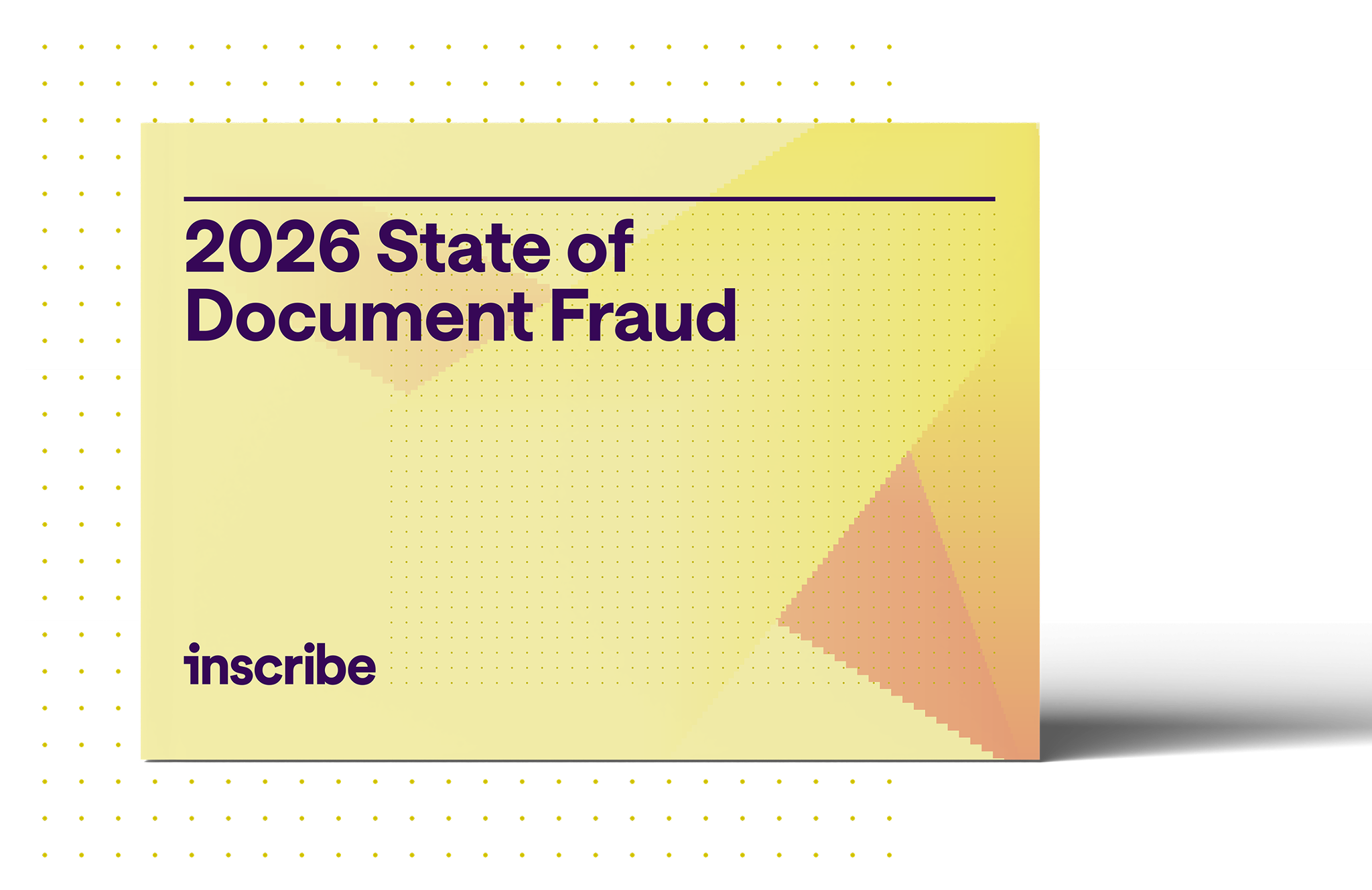
Our 2026 report covers the latest trends, the impact behind document fraud, and how fraud fighters are staying ahead.

Works with the platforms you already rely on
Inscribe integrates directly into the platforms your team already uses, including loan origination systems, orchestration platforms, and the rest of your tech stack. Connect via API or a partner integration while keeping engineering overhead low.






Independently audited controls covering security, availability, and confidentiality.

Internationally recognized information security management standard, covering how we protect customer data end to end.

Role-based access, audit logs, data encryption, and dedicated support for enterprise security reviews.
Need to complete a security review before moving forward?
Our Trust Center includes reports, assessments, and resources to make that process straightforward.
Want to see what’s hiding in your applicant documents?
Book a demo and we'll share more about our complimentary document fraud audit.
FAQs

Inscribe is an agentic document fraud detection platform built for financial services. It analyzes submitted documents — bank statements, pay stubs, tax forms, and more — using multiple layers of AI detection to identify manipulation, fabrication, and fraud before a decision is made.
Every document is analyzed simultaneously across several detection methods: forensic analysis (fonts, metadata, file history), network pattern matching against millions of real-world applications, semantic inconsistency checks, perceptual pixel-level analysis, custom insight rules, and public data verification. Together they produce a single risk score your team can act on.
Yes. Inscribe lets you define custom conditions to flag fraud, set document policy requirements, configure blocklists for suspicious entities, and build custom insights aligned to your team's SOPs. The platform adapts to your workflows, not the other way around.
The Assistant is an agentic AI co-pilot built into the platform. It reasons across every document in an application the way an experienced analyst would, explains what it found, and answers follow-up questions in natural language, helping your team go deeper on complex cases faster.
Inscribe connects via web app, API, its Collect document-gathering tool, or partner integrations with loan origination systems and orchestration platforms. It's designed for low engineering overhead so your team can be up and running quickly.
AI document fraud detection software like Inscribe analyzes submitted documents across multiple detection layers simultaneously — forensic analysis, semantic consistency checks, pixel-level perceptual analysis, and network pattern matching against millions of real-world applications. Unlike manual review or rules-based systems, AI can evaluate an entire application in seconds, flag subtle manipulation that humans would miss, and explain its reasoning in plain language so analysts can act with confidence.
Detecting fake bank statements requires more than visual inspection. Modern detection looks at font inconsistencies and metadata anomalies, balance figures that have appeared under different identities, transactions that don't add up semantically, and pixel-level edits that evade the naked eye. Inscribe cross-references submitted statements against the industry's largest financial document network to surface repeat fraud patterns and flag altered documents before they reach a decision.
Fraudulent pay stubs and tax forms often contain subtle inconsistencies — formatting that doesn't match the issuing institution, income figures inconsistent with other documents in the application, or metadata suggesting the file was edited after creation. Inscribe's forensic and semantic detection layers check for these signals automatically, comparing documents against known templates and flagging contradictions across an entire application.
Lenders and fintechs are most exposed to income fraud (inflated or fabricated pay stubs and bank statements), identity fraud (documents submitted under a false identity or recycled from previous applications), and AI-generated documents that are increasingly difficult to distinguish from genuine ones. With 1 in 16 documents showing signs of manipulation or fabrication, the volume and sophistication of fraud has outpaced what manual review and legacy rules-based systems can reliably catch.
Document verification checks whether a document is authentic — validating formatting, issuer details, and consistency against known standards. Document fraud detection goes further, looking for evidence that an otherwise authentic-looking document has been manipulated, fabricated, or reused. Inscribe does both: verifying documents using internal checks and external signals, while also running deeper fraud detection to catch alterations that pass surface-level verification.