
Catch AI-generated documents that look completely legitimate
Convincing fake documents can now be created in seconds. Inscribe looks beneath the surface of every file, analyzing metadata, structural patterns, and visual inconsistencies to identify signs of AI generation or editing, even when a document looks legitimate.
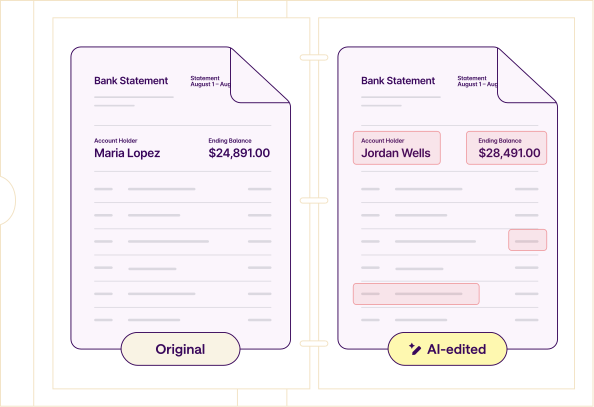
AI tools are making fake documents easier to create
Each new wave of AI tools has made convincing fake documents easier to produce. Monthly AI-generated document flags across Inscribe’s network have grown 4× in 11 months.
Realistic images arrive
AI image generators produce photorealistic images, but struggle to generate legible text.
Open models spread
Open-weight models make image generation widely accessible, with fewer guardrails.
Editing tools go mainstream
AI-generated images and mainstream editing tools make convincing fakes easier to produce.
AI creates real files
AI-generated content moves beyond images to documents that look like real files.
Open models close the gap
Open-weight models narrow the quality gap and begin targeting document creation directly.
Realistic fakes get easier
The latest generation of tools makes realistic document fraud even easier to create.
Why AI-generated document fraud is harder to detect
As AI tools become more accessible, convincing fake documents are easier to create and harder to distinguish from legitimate ones. Teams need to look beyond surface-level details to spot signs of fraud.
Anyone can do it
What once took Photoshop skills and hours now takes minutes. Guardrails don’t reliably stop it. With enough persistence, mainstream models can be talked into generating fake financial documents.
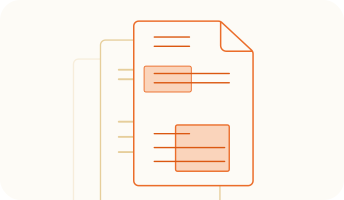
The hardest fakes start as real documents
Fully AI-generated documents still leave detectable traces. But a real document with a few AI-edited details, like a changed balance, looks nearly identical to the original.
Your reviewers can’t always see it
Clean formatting and numbers that add up can fool even experienced reviewers. Visual review alone isn’t enough to catch it.
How Inscribe detects AI-generated and manipulated documents
A polished document doesn't mean it's legitimate. Inscribe analyzes files for signs of AI generation, editing, and manipulation, even when they look flawless at first glance.
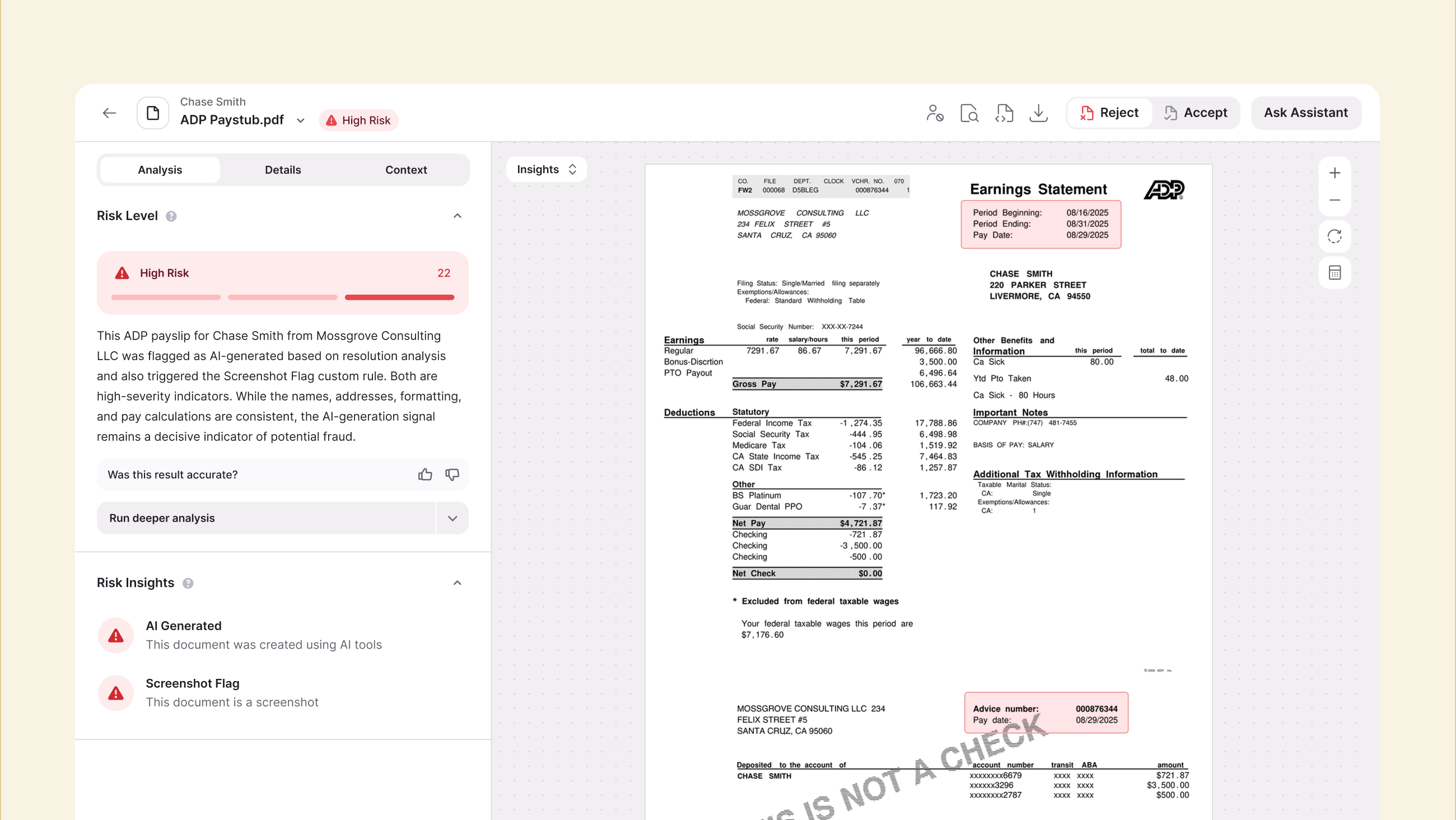
We look beneath the surface
Every file is checked for signs of AI generation or editing, from fully synthetic documents to real ones with a few changed details.
We spot patterns manual reviews miss
AI-generated content can exhibit patterns that differ from human-created documents. Some are hidden in the file itself, where reviewers can’t see them. Inscribe analyzes these signals at scale.
We compare against known-good documents
Inscribe compares each document to known-good samples from our network. When too many signs of legitimacy are missing, it’s flagged. Even small edits stand out.
Take an interactive product tour

Watch a recorded demo
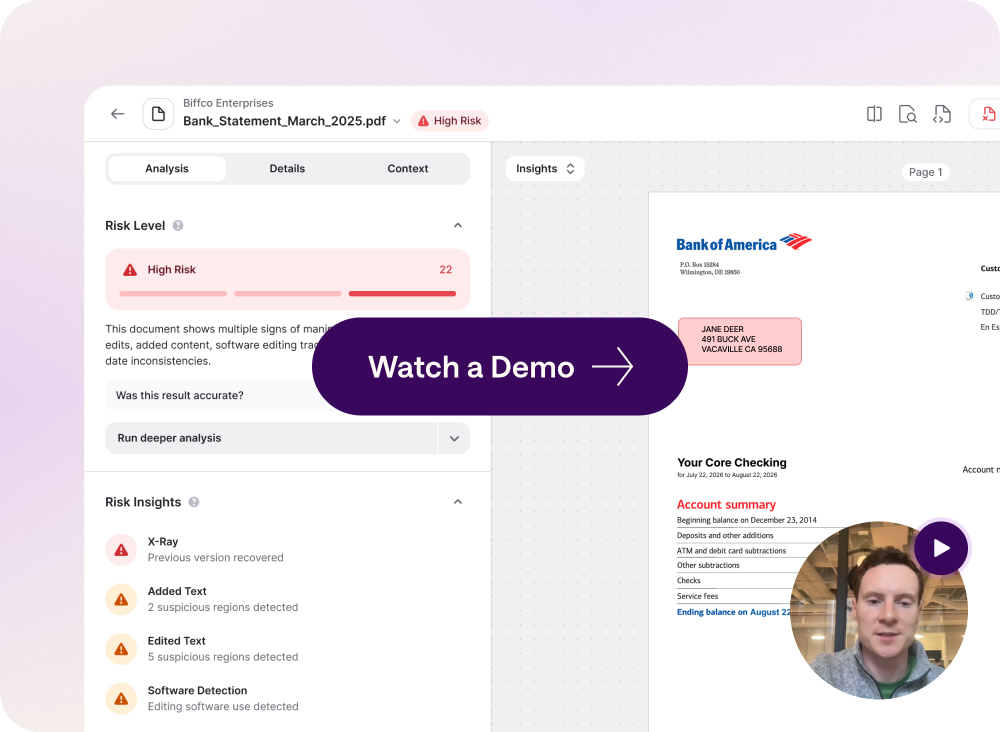
Want to see what’s hiding in your applicant documents?
Book a demo and we'll share more about our complimentary document fraud audit.

FAQs

AI-generated document fraud happens when someone uses an AI tool to create a fake document, such as a bank statement, pay stub, or invoice, and submits it as real. It also includes real documents that AI has been used to alter, like a changed balance or inflated income.
AI-generated documents are created from scratch. AI-edited documents start as a real document and have specific fields changed. Edited documents are often harder to catch because most of the page is genuine. Inscribe is built to flag both, layering many signals so what one misses, another can catch.
Yes, that’s what Inscribe is built for. Inscribe doesn’t rely on how a document looks. It looks beneath the surface of every file and draws on patterns from millions of documents, so a polished page doesn’t get a free pass.
Less and less. A year ago, perfect tables, round numbers, and generic payees gave fakes away. Those tells are largely gone, and spotting one now takes a seasoned fraud investigator and a tool. Even then, reviewing every document by eye doesn’t scale. Inscribe automates the analysis and gives your reviewers the evidence on the files that need a closer look.
Yes. Monthly AI-generated flags across Inscribe’s network grew roughly 4× in the 11 months through May 2026, and the most recent months are the highest on record.
Bank statements account for roughly one in four AI-generated flags, followed by invoices and payslips at similar rates. Together, those three types make up more than half. Format doesn’t matter much either. AI tools aren’t limited to images. AI-generated PDFs are common too. They’re hard for anyone to detect because they often carry few telling signs, so Inscribe looks at the signals they do have. If you only accept PDFs, you’re still exposed to AI-generated fraud.
Template-based fraud reuses the same layout across submissions, which makes it detectable through repetition. AI-generated documents usually don’t share those repeated characteristics, but the lines are blurring. We’ve seen AI-generated documents turn into templates. For example, someone posts one online and others edit it. Inscribe’s template and network detection can flag these as AI-generated. Template-based fraud still runs 2 to 3 times higher by volume, and sophisticated fraudsters often use both. Inscribe is built to detect both.
Metadata is one of many signals we use, but we also analyze the full content of every document. That way, we can still flag fraud when metadata is missing, stripped, or looks normal.
Any team that makes decisions based on submitted documents. That includes banks, credit unions, lenders, fintechs, and payments companies reviewing bank statements, pay stubs, invoices, and business filings during onboarding, underwriting, and compliance.
Inscribe connects via web app, API, its Collect document-gathering tool, or partner integrations with loan origination and orchestration platforms. Documents are analyzed automatically and returned with a risk level. Low-risk documents clear without review, and flagged ones arrive with the supporting evidence already assembled.


